TECHNICAL ASPECTS
The 13.3 kilometres of tunnels run through one of the densest urban areas in France. One of the main challenges is to carry out the work on the stations and service structures (the access shafts to the tunnel for maintenance and passenger evacuation) in extremely tight spaces, located in the heart of residential or business areas.
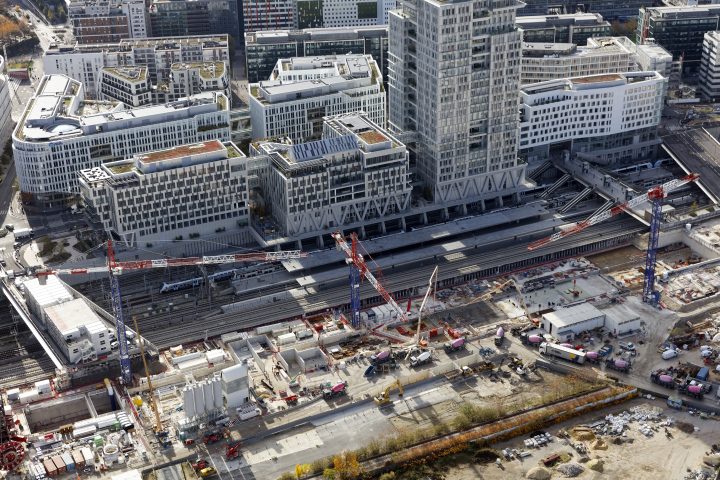
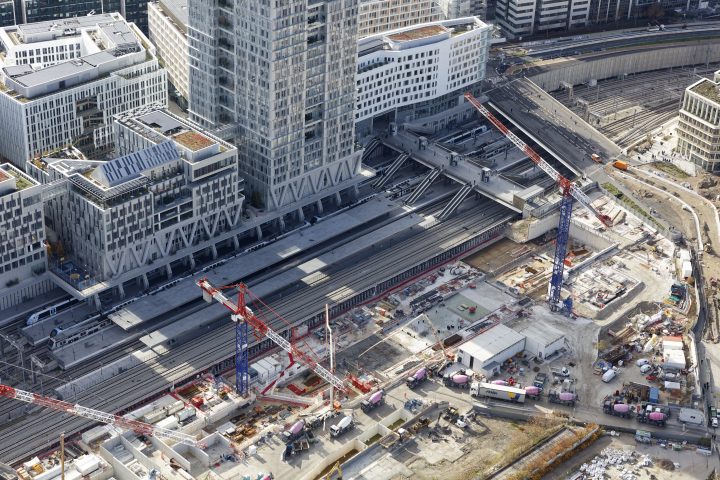
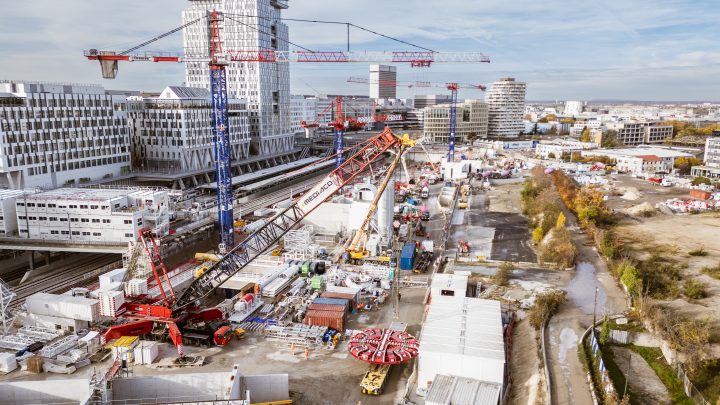
This is the case for La Défense station, which has to be built in an extremely limited space, right next to Europe’s leading business district, the 4 Temps shopping centre and several large housing estates. The works zones are adapted to each stage of the project so that the works can be completed without disrupting road traffic, a major issue in this sector.
At Saint-Cloud, a «quadrilobe» structure was designed for the station. This shape minimises wall deformation by taking advantage of the arch effect, thereby optimising the geometry of the structure. This is a technical and logistical feat on a site with a footprint barely larger than the station box, just a few metres from the SNCF tracks, a hospital and the Institut Curie.
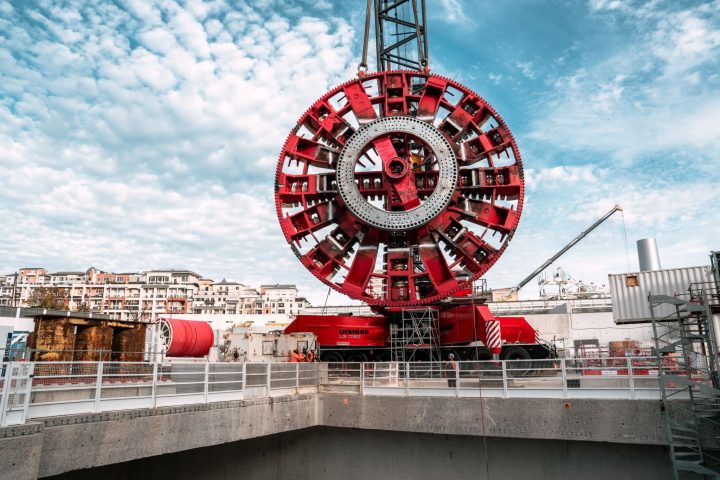
In addition, the excavation of the South section of Line 15 West involves a total of three tunnel boring machines, enabling work to be carried out simultaneously on several sections of the route in order to optimise construction timelines.
The excavation works are organised into several distinct sections: a 5.1 km tunnel between the Île-de-Monsieur structure and the Rueil – Suresnes Mont-Valérien station; a 4.3 km tunnel between the Nanterre La Folie station and the Boulevard de la Paix structure in Courbevoie; and a 3.9 km tunnel between the Nanterre La Folie station and the Rueil – Suresnes Mont-Valérien station.
This segmentation makes it possible to adapt construction methods to the specific constraints of each area crossed, within a dense urban environment.