The works, entrusted to the joint venture and amounting to €496m, are part of the extension of RER line E towards the west of Paris (Eole). The works will start in the summer of 2016 and will continue for 61 months. The operation will mobilise 700 construction workers at the peak of activity. It requires four million hours of labour with more than 300,000 hours that will be carried out under work-integration programmes.
With this worksite, VINCI Construction confirms its expertise in management of major projects and its know-how in underground works and foundations.
A complex structure under an emblematic site: the CNIT
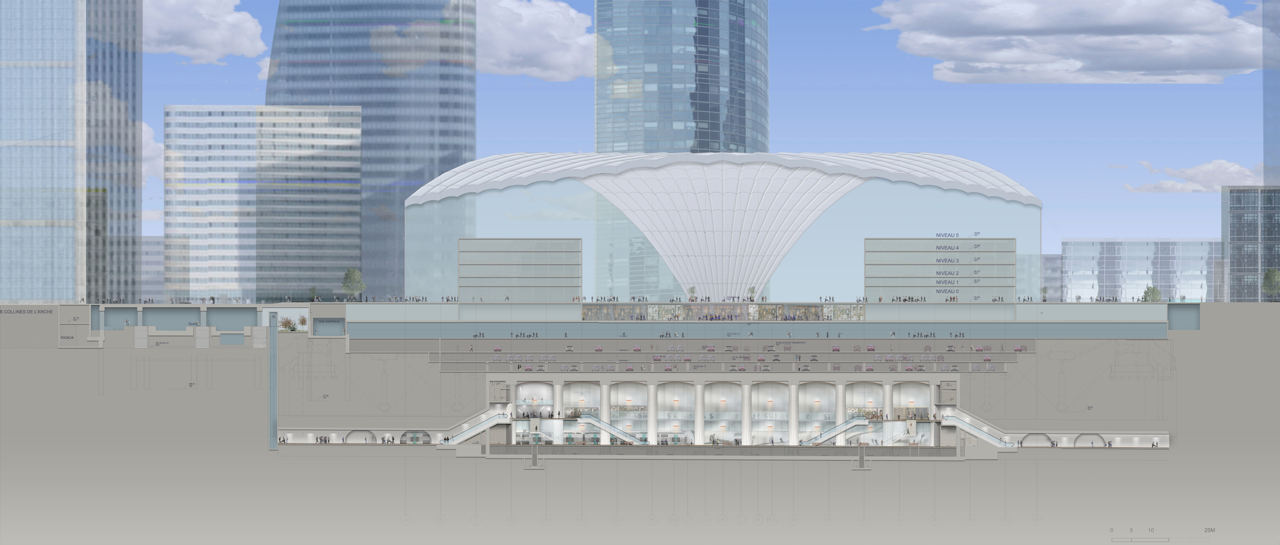
The operation covers building the new La Défense station under the CNIT dome, a highly technical project that entails building an underground cathedral while supporting the existing structures and ensuring operational continuity of the site. All the CNIT offices, shops and hotel must continue to function normally throughout the duration of the works.
Apart from the underground structural work beneath the CNIT itself, the company will also be building one kilometre of tunnels, a 40m-deep and 15m-diameter shaft and a large number of underground pedestrian corridors enabling connections between the RER E and A lines, the L and U lines of the Transilien and the T2 Tramway.
A huge technical feat in the heart of the La Défense business district
The major challenge of the worksite is that it has to be executed in the dense and complex urban environment of La Défense, the works requiring the excavation of 350,000 cu. m. of rubble. An ambitious project that opens the way to the Grand Paris Express network
Extension of the RER E line will significantly reduce travel time for thousands of Paris region residents and thereby improve their everyday lives. Extending the E line and building the new CNIT-La Défense station will provide commuters with better quality of service and connections with other RER lines and the future Grand Paris Express network.
This new construction project comes in the wake of other operations already conducted by VINCI in Europe’s largest business district. In December last year, the Group announced construction of Trinity, an innovative new skyscraper on which works will be completed in the second half of 2018.
For more information about Eole: www.rer-eole.fr
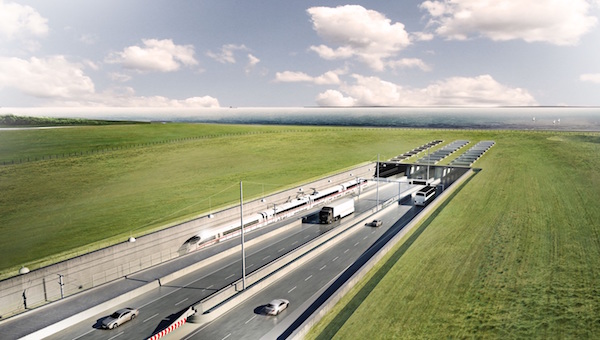
The Femern Link Contractors joint venture has signed on the 30 May with the Danish government *contracts in Copenhagen for the design and build of the world’s longest immersed road and rail tunnel, the Fehmarnbelt link between Denmark and Germany.
The joint venture has won three contracts, two contracts covering construction of the immersed tunnel and the tunnel element factory that will manufacture the precast tunnel elements and a contract covering the building of the portal structures, toll buildings, bridges and ramps. The three contracts have a combined value of €3.4 billion.
The joint venture comprises VINCI Construction Grands Projets (lead company for the two tunnel contracts), Per Aarsleff Holding (lead company for the portal contract), Solétanche-Bachy International, CFE., Wayss & Freytag Ingenieurbau, Max Bögl Stiftung & Co, BAM Infra and BAM International.
The joint venture has appointed Dredging International (DEME Group), as dragging subcontractor for the tunnel contracts and COWI, as consultant for all three contracts.
The 18 km immersed tunnel connecting Denmark’s Lolland Falster region with Germany’s Schleswig Holstein region will be the world’s longest immersed road and rail tunnel. It will shorten the journey between the German and Danish coasts to just 10 minutes by car and 7 minutes by train compared to the current travel time of one hour by ferry or a 160 km detour via the Danish region of Jutland by car.
The Fehmarnbelt tunnel project is one of Europe’s largest infrastructure projects to date. It will foster trade and tourism in Northern Europe.
*These contracts are conditional: final and binding contracts are signed with the successful contractors, but construction work will begin after the German construction permits are implemented.
Find out more about the project (including high res pictures and videos downloadable): www.femern.com
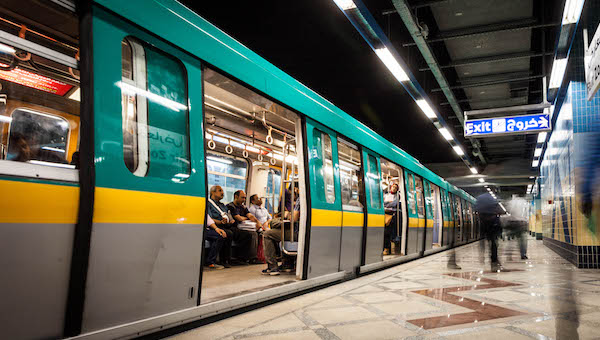
The President of the Arab Republic of Egypt, Abdel Fattah el-Sisi, and the President of the French Republic, François Hollande, attended the official signing ceremony on 17 April 2016. The client, the National Authority for Tunnels, demonstrated renewed confidence in the joint venture, which has been building the metro system for North Africa’s largest urban area since 1981.
The new €1.1 billion, 67-month contract covers civil engineering for Phase 3 of Line 3, including 17.7 km of new line and 15 stations (eight underground, five elevated and two at ground level). The works will require construction of a new tunnel under the Nile. Once completed, Line 3 will increase the overall length of the Cairo metro system to 100 km and serve five million passengers daily. Work will start in the residential and administrative parts of the capital, including Zamalek Island, and end in the city’s densely populated and highly urbanised northern and southern districts.
The project will generate about 5,000 jobs and continue the longstanding French-Egyptian cooperation in underground works. It will also offer French SMEs a large number of opportunities. In the previous phase of the project, handed over in 2014, the joint venture called on more than 600 French SMEs as suppliers and subcontractors.
Driven by strong economic and population growth, Cairo is now North Africa’s largest city. The urban area has 16 million inhabitants and a very high population density of 73,500 people per km2. Automobile traffic has become highly congested. The expansion of the Cairo metro will help to efficiently and effectively regulate traffic and substantially reduce carbon dioxide emissions.
In addition, the joint venture is also working on Phase 4a of Line 3, which will extend the system towards the eastern part of the city. The contract was signed in February 2015 and handover is set for the end of 2018.
This contract, worth over 145 million € (100 million pounds) covers design and construction of a 1,200 metres incrementally launched bridge over the Forth river estuary and 2-kilometre access roads on either side of the bridge. The structure will provide a link between two major arteries to the north and south of the Forth river and will relieve congestion in the town of Kincardine, 40 kilometres northwest of Edinburgh. The project should also satisfy environmental and ecological concerns.
Work will begin in June 2006 and will last 29 months.
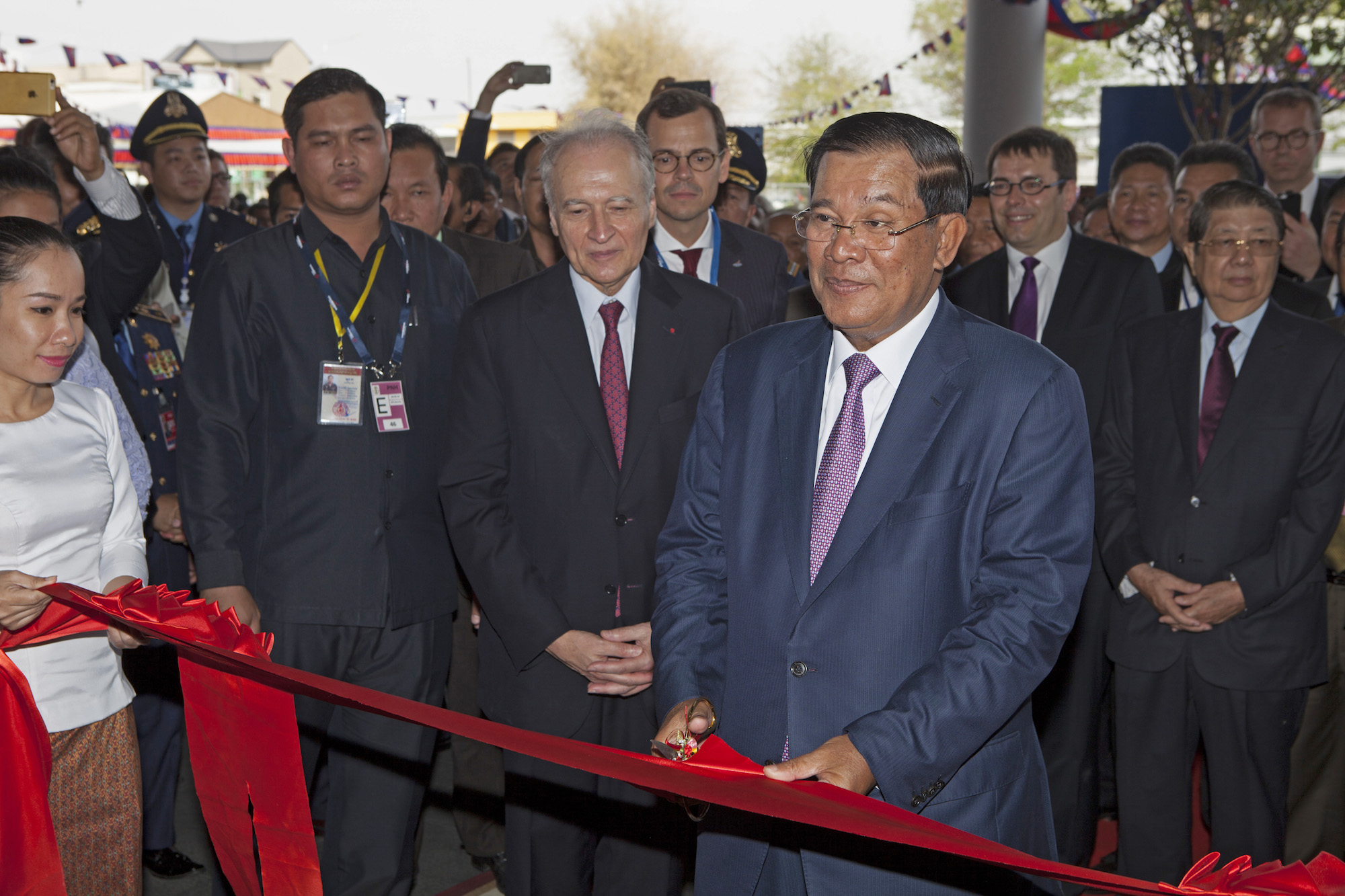
These expansion projects, carried out within the framework of the concession held by VINCI Airports, the VINCI Group’s airport subsidiary, in partnership with Muhibbah, double the capacity of the two airports from 5 to 10 million passengers per year. The investments, amounting to more than $100 million in the 2013-2016 period, are designed to enable the airports to accommodate substantial air traffic growth: over the past 20 years, the number of passengers has increased 10-fold, driven by the country’s very dynamic economy and tourism sector.
Developing new destinations and services
To continue to expand traffic, VINCI Airports works to promote new destinations, notably in India and the Philippines. To better serve its growing business traveller clientele, VINCI Airports opened a 1,400 m2 business lounge at the Phnom Penh airport. It is run according to the standards of Asia’s best airports.
Works in occupied premises
VINCI Construction Grands Projets, the Group subsidiary dedicated to major structures, initiated the expansion works in 2013 and carried them out in the terminals, which remained open throughout the project, without disrupting their operation. The projects also used state-of-the-art BIM (Building Information Modeling) technology to improve safety performance and construction schedule compliance.
The architecture of the Phnom Penh airport is a fairly classical example of modern capital city design, but the Siem Reap airport, near the Angkor temples, a UNESCO World Heritage site, takes inspiration from Cambodian tradition.
The Group presents its subsidaries’ expertises & projects: Entrepose, Sogea-Satom, Soletanche Bachy/Menard and VINCI Construction Grands Projets. Take a look at our offer in the mining activities: from concept to start-up, our comprehensive construction offer.
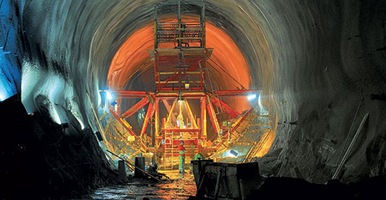
The ceremony was attended by Mr. Mikael Damberg, Sweden’s Minister for Enterprise and Innovation, Mrs. Lena Erixon, Swedish Transport Administration Director General and Mr. Alain Bonnot, VINCI Construction Grands Projets Chairman.
The tunnels are the country’s most important railway infrastructure project in 40 years. It took 10 years and an investment of €850 million to complete them.
The project was initiated in 1970 but did not effectively get under way until 2004, following two failed attempts by other companies to build them. VINCI Construction Grands Projets and its Swedish partner Skanska were the first to succeed in boring through a complex geological formation to construct two parallel tunnels with a unit length of nearly 5,500 metres and an interior diameter of about 9 metres.
The Hallandsås tunnels are part of the national refurbishment program of the Malmö-Gothenburg railway line. The new line will make a strong contribution to opening up the economy of western Sweden. When the line officially inaugurated today is opened to traffic on 15 December, its capacity will increase from 4 to 24 trains per day, travel time between Malmö and Gothenburg will be shortened and the load capacity of freight trains will double.
The project introduced one-of-a-kind environmental management measures. A broad-based ecological management programme was applied to protect water and the local ecology as a whole. The County Administrative Board, the environmental assessment group and the neighbouring Båstad and Ängelholm municipalities also continuously monitored construction.
With its worldwide recognised transport infrastructure expertise, VINCI is a global company able to support public authorities’ railway infrastructure projects. Over the past 20 years, VINCI has bored some 900 km of tunnels. It is currently operating 10 large tunnel boring machines around the world on projects that include the major Lee Tunnel project in London designed to clean up the Thames; Line 3 of the Cairo metro; and 13.8 km of tunnels to connect the Doha airport with the historic centre of the capital of Qatar, on which five tunnel boring machines are working simultaneously.
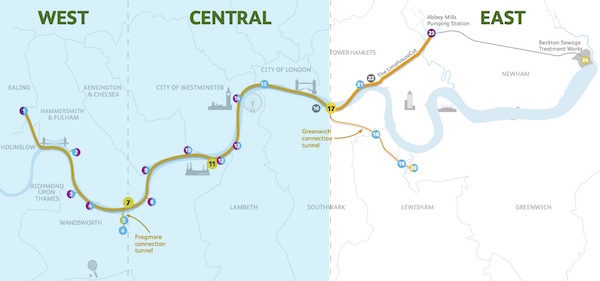
The works package includes the construction of two sections of tunnel, a main tunnel (5.5 km) and a connecting tunnel (4.6 km) for combined rainwater and wastewater to the east of London. Located between 45 and 65 metres below ground, the two tunnels will be excavated using slurry pressure balance tunnel boring machines. The main tunnel will have an interior diameter of 7.20 metres, while that of the connecting tunnel will be 5 metres. The East section also includes the construction of five large shafts (diameters of between 17 and 25 metres), maritime works on the Thames, structures connecting with the existing wastewater collection system and electromechanical works packages.
A project optimisation phase (design, methods, etc.) is starting immediately. The launch of works on the site is planned for 2016, with delivery scheduled for 2023.
The East works package is one of three making up the Thames Tideway Tunnel, a programme that calls for the construction of a total of 25 km of tunnels. The Thames Tideway Tunnel is urgently needed to help tackle the issue of discharges of untreated sewage into the tidal River Thames and ensure that London’s sewerage system is fit for the 21st century.
This contract follows on from that for the Lee Tunnel, which VINCI Construction Grands Projets and Bachy Soletanche started building to the east of London in January 2010.
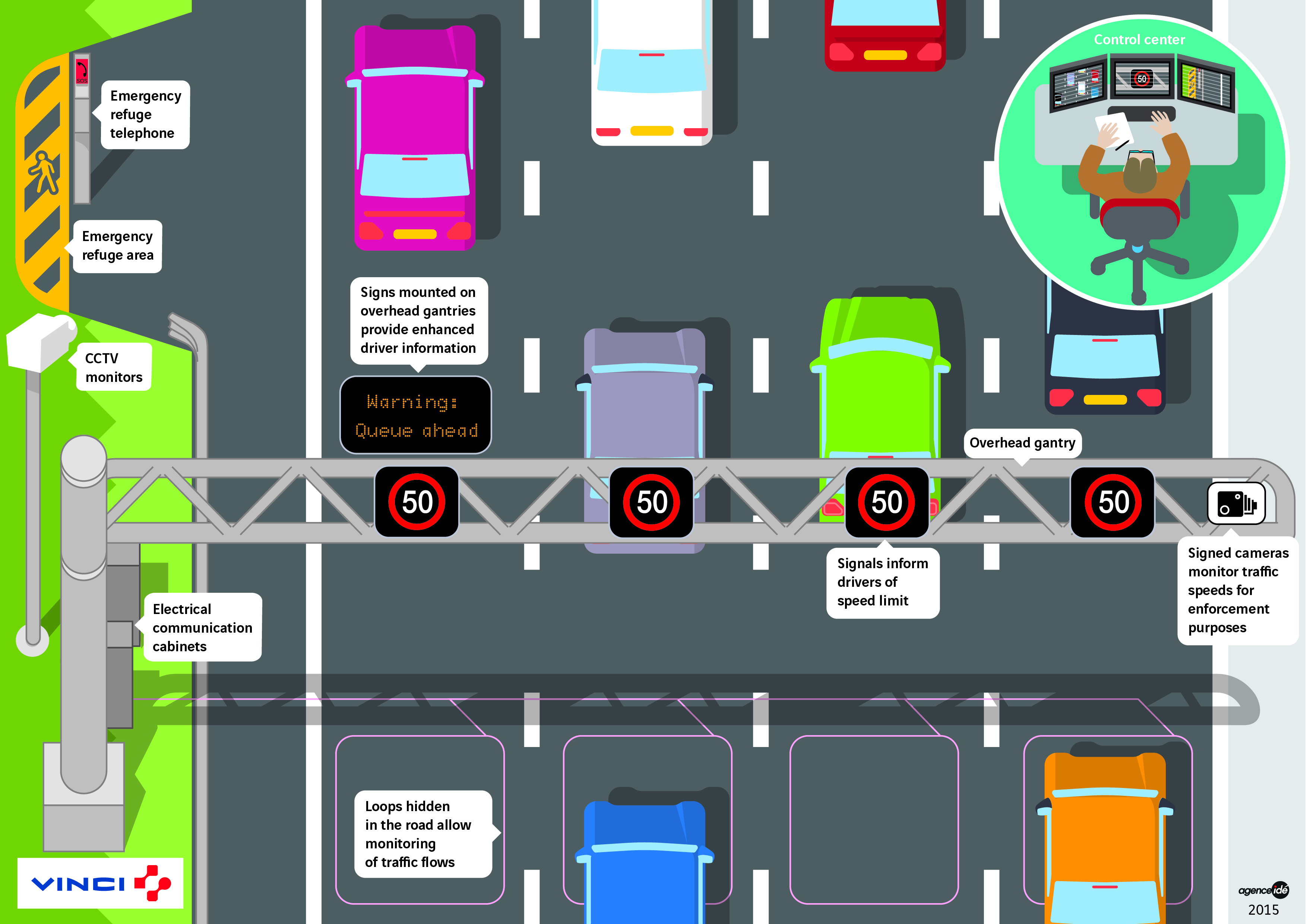
This first contract, with a value of €65 million, is part of the Smart Motorways Programme (SMP) introduced by Highways England. It is designed to add extra capacity on around 18 km M5 motorway section between junctions 4A and 6 from 3 to 4 lanes by making smart use of the hard shoulder. The project also includes real-time management of traffic flows according to traffic density. Sensors send information to a control centre that is able to modulate speed limits via dynamic signage. The improved traffic flow will benefit thousands of motorists per day.
The works package (package 1) also includes two other projects to be carried out during the coming five-year period (the M6 motorway between junctions 2 and 4, and the M4 between junctions 3 and 12). Subject to statutory approval and continued value for money, the M6 is expected to start work in 2017/18 and the M4 scheme in 2016/17 at an estimated combined value of up to €803 million. Final target costs for these contracts will be agreed with Highways England.
“The Group’s employees, SME and ISE partners and subcontractors together performed the feat of completing this gigantic earthworks and civil engineering project in three years of works. The outsized project was a major challenge in terms of organisation, production and management, employing 8,500 people simultaneously at the height of activity. This great success reflects the uncompromising engagement of our construction teams, whom I take this opportunity to commend. The most visible part of the project is now behind us, as we move on to the second stage of the project focused on railway equipment. The success of this second stage is a huge responsibility for VINCI, but it also gives the Group a tremendous opportunity to demonstrate, once again, the power of its integrated concession-construction approach and the vitality of the public private partnership concept. The goal, which we all share, is to meet the target date of 31 July 2017, when the line is scheduled to begin commercial operation,” said Xavier Huillard.
VINCI offers acknowledged expertise in complex roadworks. Its track record includes slip road widening at M1 junctions 25 to 28 in the United Kingdom between 2007 and 2010, the East End Crossing motorway section in the U.S. state of Indiana, currently under construction, and the New Coastal Highway on Reunion Island, also under construction.
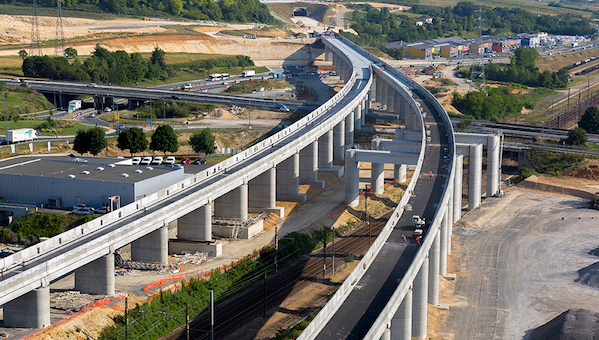
VINCI took the opportunity to commend the performance and engagement of COSEA, the construction joint venture responsible for designing and building the South Europe Atlantic high-speed line, which took only 38 months to complete all earthworks and civil engineering works. Over the three-year period, the construction teams set up a large number of worksites along the alignment to build the 340 km rail infrastructure, 24 viaducts and 500 engineering structures.
The record completion time made it possible to hand over the roadbed ahead of schedule to the teams in charge of installing the rail equipment, who are now progressing at a rate of 2×650 metres of platform per day.
“The Group’s employees, SME and ISE partners and subcontractors together performed the feat of completing this gigantic earthworks and civil engineering project in three years of works. The outsized project was a major challenge in terms of organisation, production and management, employing 8,500 people simultaneously at the height of activity. This great success reflects the uncompromising engagement of our construction teams, whom I take this opportunity to commend. The most visible part of the project is now behind us, as we move on to the second stage of the project focused on railway equipment. The success of this second stage is a huge responsibility for VINCI, but it also gives the Group a tremendous opportunity to demonstrate, once again, the power of its integrated concession-construction approach and the vitality of the public private partnership concept. The goal, which we all share, is to meet the target date of 31 July 2017, when the line is scheduled to begin commercial operation,” said Xavier Huillard.
An exemplar social and environmental project
The project was carried out in consultation and in partnership with the local stakeholders. In environmental terms, the Group’s teams worked day-to-day with non-profit organisations to optimally blend the infrastructure into its environment. They identified more than 220 protected species. In social terms, COSEA, Pôle Emploi (the French job centre) and the local authorities also worked closely together to recruit and train 2,000 local workers, who joined the 6,500 employees of the partner companies. Among other things, this partnership arrangement made it possible to exceed the initial target work integration objective, nearly doubling the number of work integration hours to 4.5 million of the 25 million total hours worked. Three-quarters of the people recruited locally for the infrastructure project were redeployed to the railway project or outplaced, notably via the Fondation COSEA pour Entreprendre (COSEA Enterprise Foundation), which supports business creation. Lastly, the project was exemplary in terms of safety, recording no accidents with serious consequences throughout the 25 million hours worked.
The Tours-Bordeaux high-speed rail line: one of Europe’s largest infrastructure projects
The 340 kilometers line, which includes 40 km of connections to the conventional rail system, represents a total investment of €7.8 billion and constitutes the largest railway sector public private partnership ever signed in France and one of Europe’s largest infrastructure projects.
Following the six years required to design and build it, the line will shorten the travel time between Bordeaux and Paris to two hours and five minutes.
The 50-year concession contract covers financing, design, construction, operation and maintenance of the Tours-Bordeaux SEA HSL. Design and works, under LISEA programme management, were entrusted to the COSEA construction joint venture led by VINCI Construction and also including Eurovia and the VINCI Energy business line, in association with BEC, NGE, TSO, Ineo, INEXIA, Arcadis and Egis Rail. Work got under way in the first half of 2012. The MESEA company, held jointly by shareholders VINCI Concessions (70%) and INEXIA (30%), will be responsible for operating and maintaining the line.
Key figures:
- 340 km and 40 km of connections
- 113 municipalities, 6 French départements, 3 regions
- Around 500 engineering structures, including 24 viaducts
- 8,500 jobs for works companies at the height of activity
- 150 permanent jobs to handle commercial service (operation and maintenance) once construction has been completed
- 20 % of the hours worked on the infrastructure project were part of the work integration scheme
- Mitigation of the impact on the natural environment will involve more than 3,500 hectares of offsets
Video “LGV SEA 2015 – Celebration of the end of the infrastructure works“