Wastewater treatment plant and intake collector

Yemen’s National Water and Sanitation Authority mandated us to build a wastewater treatment plant with a capacity of 50,000 m³/day in the capital city of Sana’a. The project, located north of the capital city next to El Rahaba International Airport, included construction of an underground intake wastewater pipeline made of fibreglass that is 6 kilometres long and ranges in diameter from 1,200 to 1,500 millimetres, civil engineering for the filtration plant, construction of a 200,000-m³ storage pond for wastewater designed for irrigation purposes, and implementation of about 3 kilometres of cast-iron or fibreglass pipes ranging in diameter from 80 to 1,500 millimetres. The treatment plant includes a workshop, a back-up power station (4 MW), and an administrative building.

BACKGROUND

This was a long-awaited project. Wastewater from the city was carried in pipes that had been installed 10 years earlier and discharged in a stream near the airport. Given Yemen’s desert climate and water stress, the wadi’s wastewater was used for agricultural purposes. However, the water was not treated beforehand (and therefore its use was not recommended). In addition, Sana’a continued to grow, both in terms of population and surface area. Its population was only 20,000 in 1911, but had ballooned to more than 2 million by 2010. As a result, wastewater treatment became a major public health issue. In response, consulting engineering firm Howard Humphreys designed a project, and an international call for tenders was launched.

TECHNICAL OVERVIEW

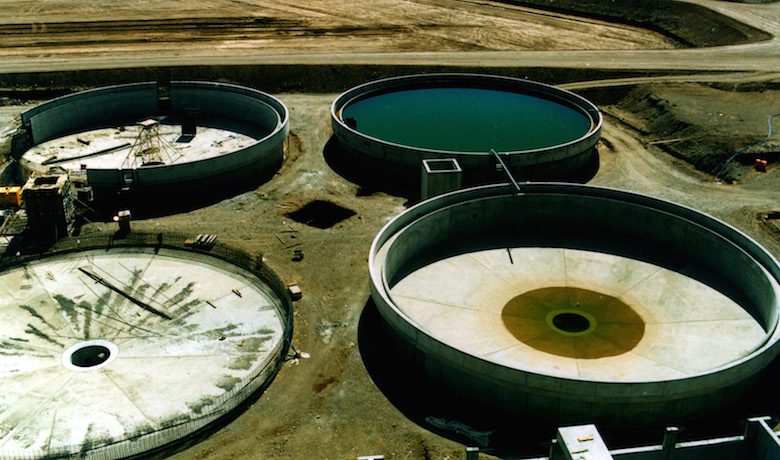
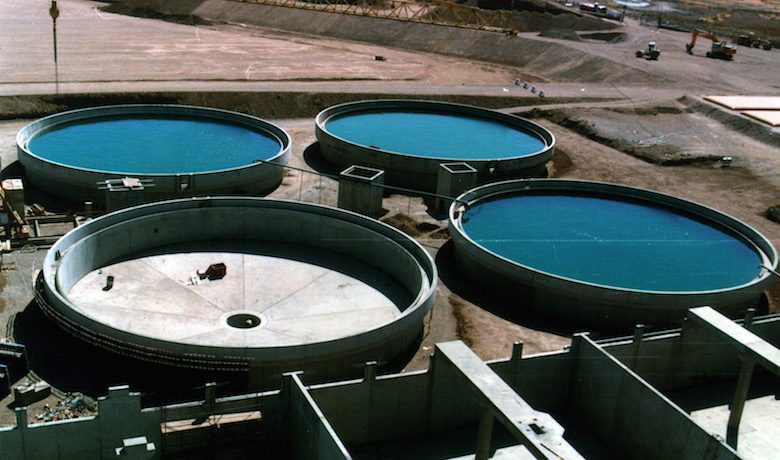
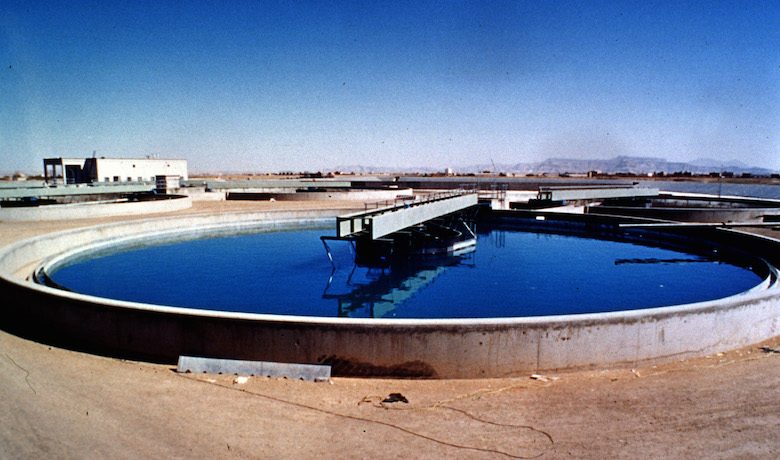
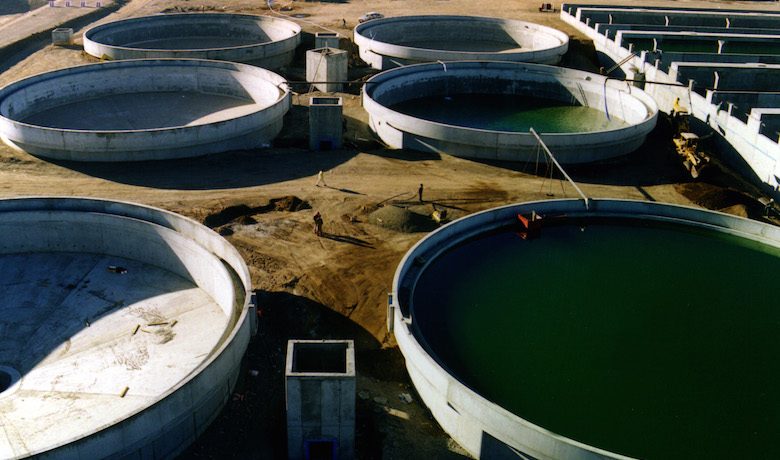
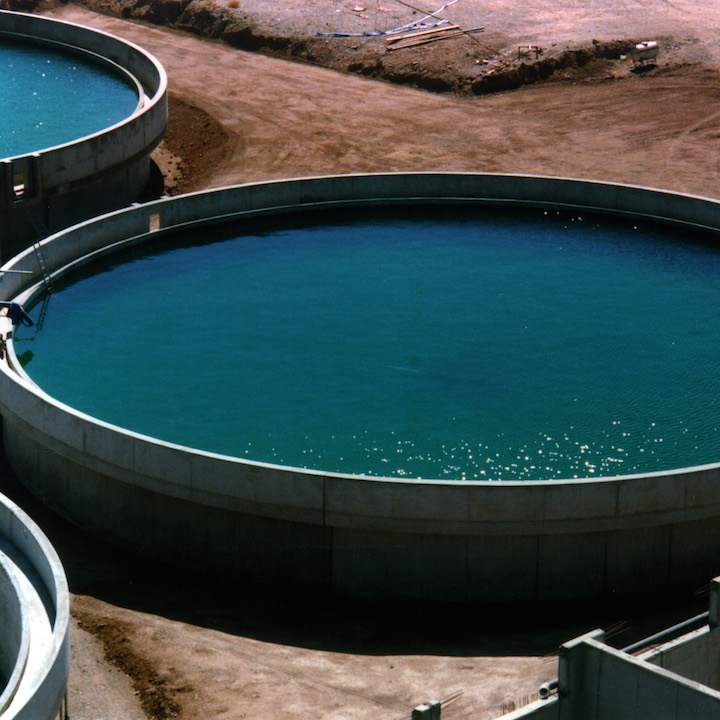
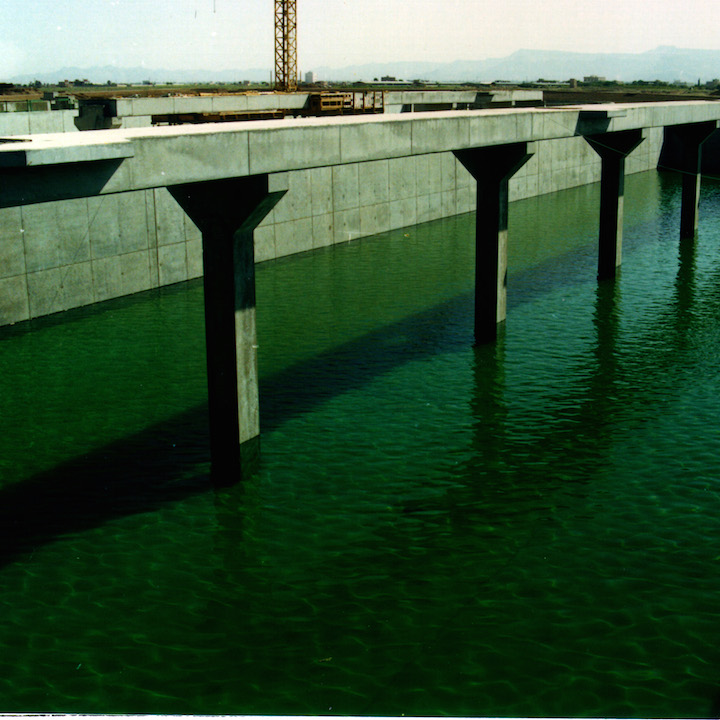
Water inflow and outflow in each basin is carried out using raised apertures at each end of the basin and controlled by sluice gates and motor-powered spillways. Water is collected in a gutter shared by all basins and distributed by two pipes to the distribution chambers in the decanters. Eight decanters collect clarified water and a culvert collects muddy water. Decanters are equipped with a rotating metal bridge from which scrapers are suspended. A chlorination building (30 by 22 m) injects gaseous chlorine to disinfect water in clarified effluent flowing in an underground basin prior to discharge into the pond. The pond, which has a capacity of 210,000 m³, consists of backfilled embankments 5 metres high and is covered with polyethylene membranes. Once it is treated, the wastewater can be used for irrigation. Excess water can be discharged into the stream without danger.
Four layers, with a diameter of 18 metres, receive muddy water, treat it, and return it to the pumping station; the water at the bottom is suctioned by 5 sludge pumps and discharged onto 20 drying beds. These drying beds (basins measuring 27 by 555 m) collect water from the sludge-percolation process. After drying in the sun, the sludge above the draining layers are recovered and stored.
The pipes running between facilities are all located underground. These are cast-iron pipes with polyethylene sheathing. Project planning helped ensure that most of the required tasks could be carried out internally, thereby minimising external participation.

During the 30-month contract waiting period, we decided we would complete all works in 24 months to offset likely delays associated with supply and procurement in Yemen. Thanks to this decision, we delivered the project on time.

IMPACT

All over the world, wastewater treatment is a leading public health issue. As Yemen’s capital and largest city, Sana’a needed a wastewater treatment facility to keep pace with its growing population. The filtration plant treats wastewater from both industry and households.
Today, the water collected by the system is treated and made safe for irrigation, which is a definite benefit for this desert country confronted with water stress. Previously, the water discharged into the wadi gave off an offensive odour; this sanitation project has therefore improved living conditions for local residents.

Project participants

Client
National Water and Sanitation Authority (NWSA)

Project management
MISR Consulting Engineers

Key figures

Implementation dates
November 1997 to may 2000

Earthworks
190,000 m³

Concrete poured in place
22,000 m³

Piping
9,600 m

Testimonial

“We had no experience in this country. Yemen was a wonderful discovery. It’s a magnificent country where we had to adapt to local realities quickly. A first for the consortium and for us.”

ERIC GRASSET, PROJECT DIRECTOR

Rehabilitating the drinking-water network in Djibouti

Djibouti

Discover