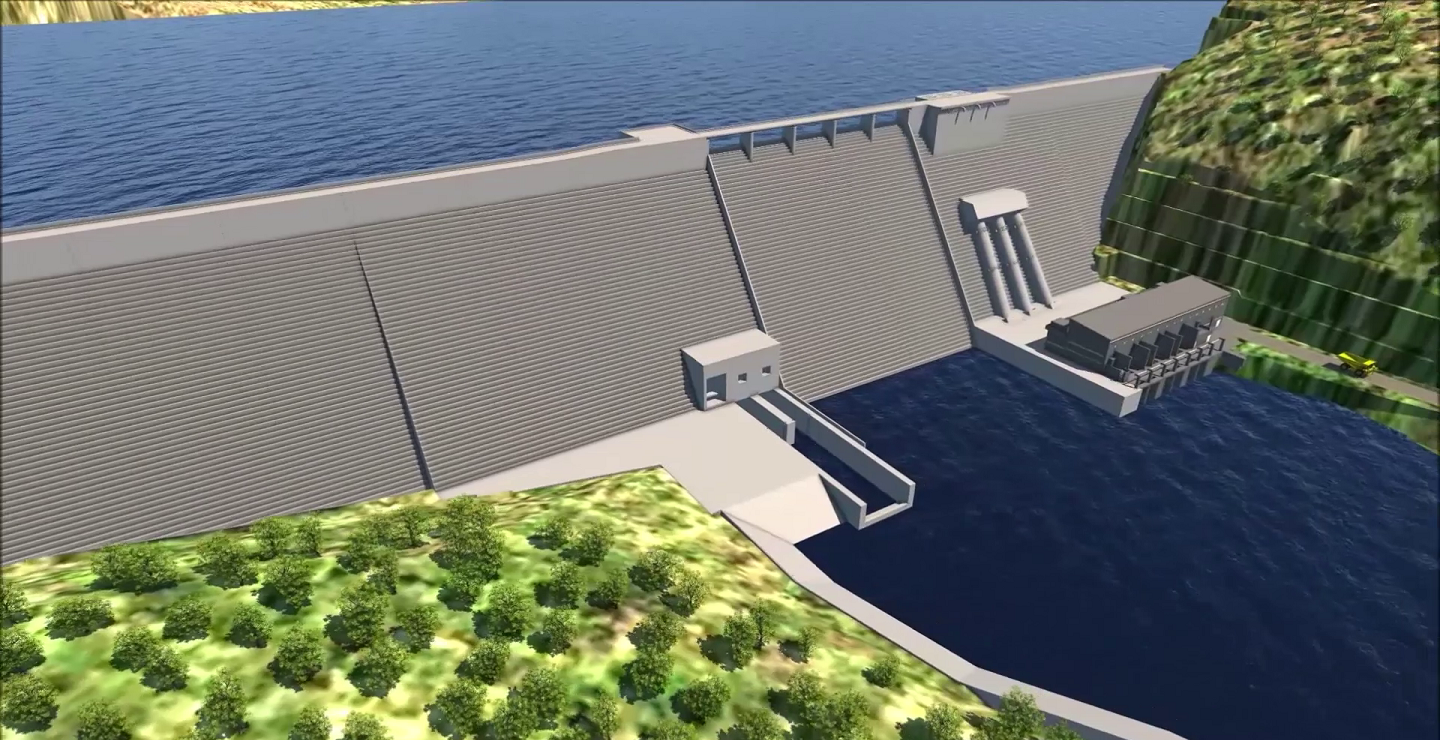
The construction of this dam, 91 meters high and with a capacity of 128 MW, will allow the production of renewable energy, the development of irrigation of agricultural land as well as the supply of drinking water to surrounding communities. The works will start in the first half of 2021 and will last 48 months. At peak activity, the site will employ 1,000 people recruited and trained locally.
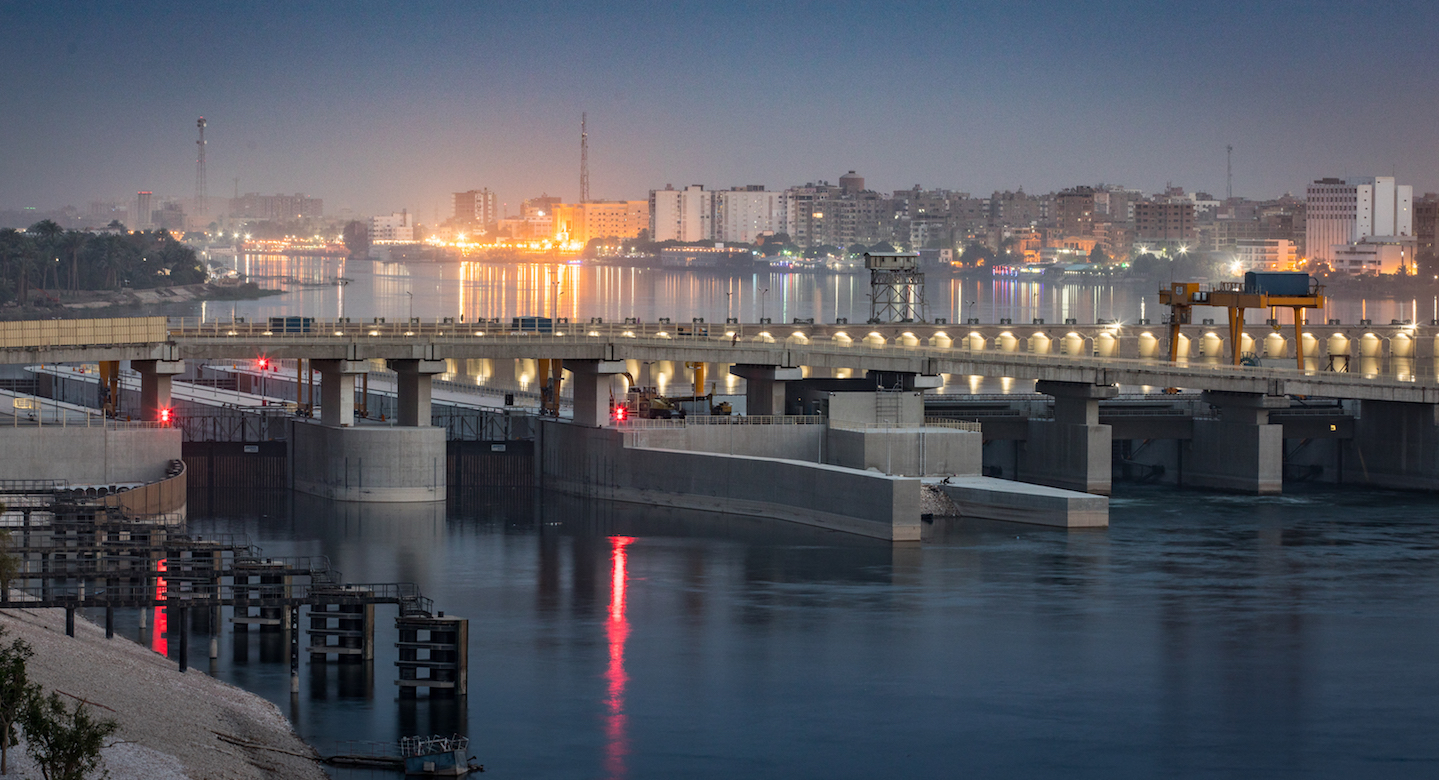
The new Assiut Dam, which is located on the Nile some 250 kilometres north of Luxor, is designed to replace an existing dam, built early in the 20th century 400 metres farther upstream. This new project, inaugurated in an official ceremony on August 12, 2018, aims to regulate the flow of the Nile, providing water for irrigation and power-generation (32-MW output produced by four 8-MW turbines). Accordingly, the dam is equipped with a power plant. Two locks ensure river navigation. The dam is designed to maintain a head of 4 metres to ensure a minimum discharge of 445 cubic metres per second into the Ibrahimia Canal to irrigate nearly 700,000 hectares of land between its location and Cairo.
Naga Hammadi Dam, located 150 kilometres north of Luxor, is designed to replace an existing dam built early in the 20th century and provide irrigation to the Nile River Valley, regulate the flow of the river, and generate electrical power. This concrete gravity dam features two locks for river navigation and produces 64 megawatts of electricity thanks to four 16-megawatt turbines. To build Naga Hammadi, the Nile River had to be diverted for three years, and a total of 400,000 cubic metres of concrete was used at a monthly pace peaking at 30,000 cubic metres.
The Lesotho Highlands Water Project is a water and electrical power supply project implemented by the governments of Lesotho and South Africa to find new sources of supply to support development in both countries. This major undertaking is the largest water-transfer project ever launched in Africa. Our consortium was in charge of part of the project. Our work package included building hydraulic conduits 65 kilometres in total length and 5 metres in diameter, two water intake structures with siphons, and several shafts and installing a surge chamber.
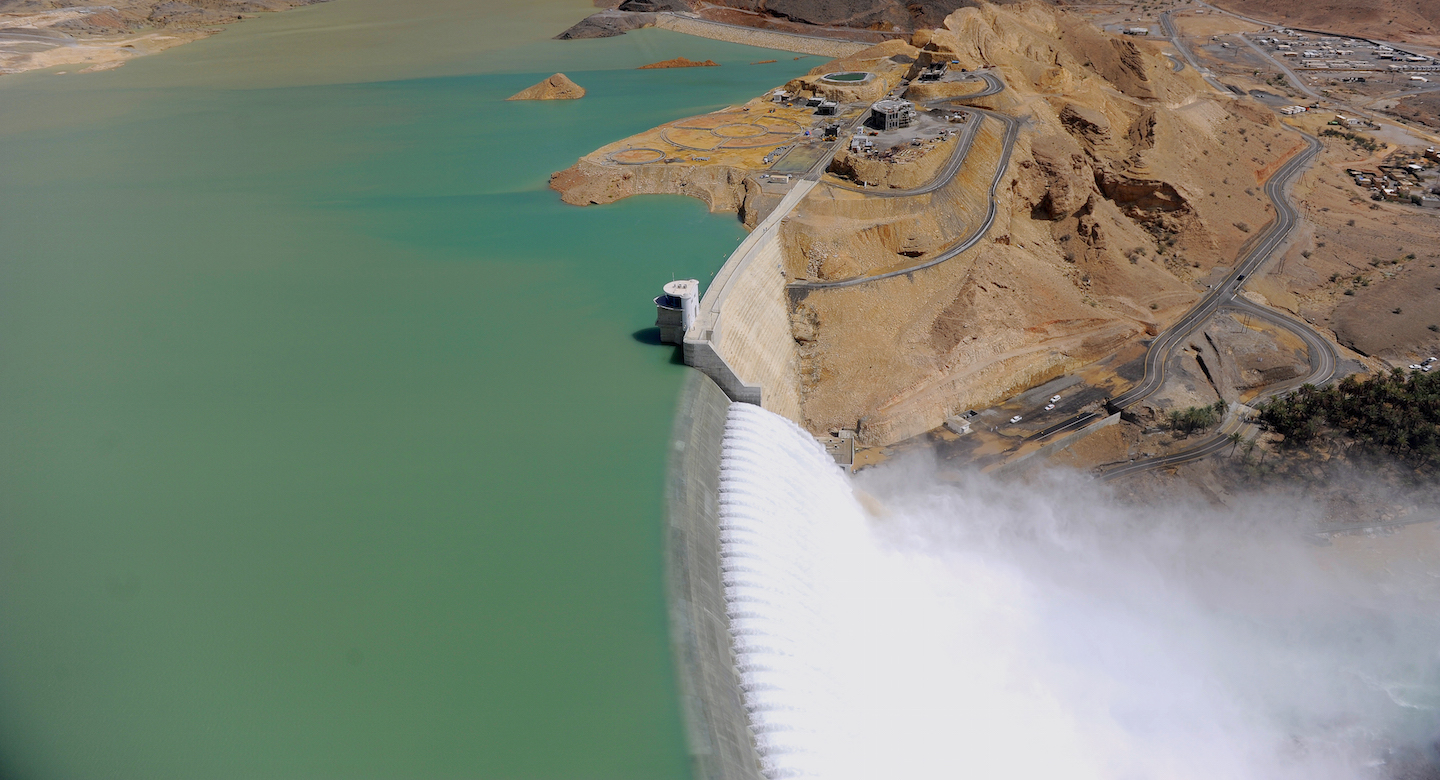
Supply drinking water to the cities of Muscat and Quriyat – that was the objective of this project entrusted to VINCI Construction Grands Projets by the Government of the Sultanate of Oman, which called for the construction of dams on the Wadi Dayqah some 80 kilometres from the capital city of Oman. The project included construction of a roller-compacted concrete main dam 572,000 cubic metres in volume, 75 metres high, and 435 metres long as well as an ancillary, earth-fill dam 960,000 cubic metres in volume, 48 metres high, and 360 metres long.
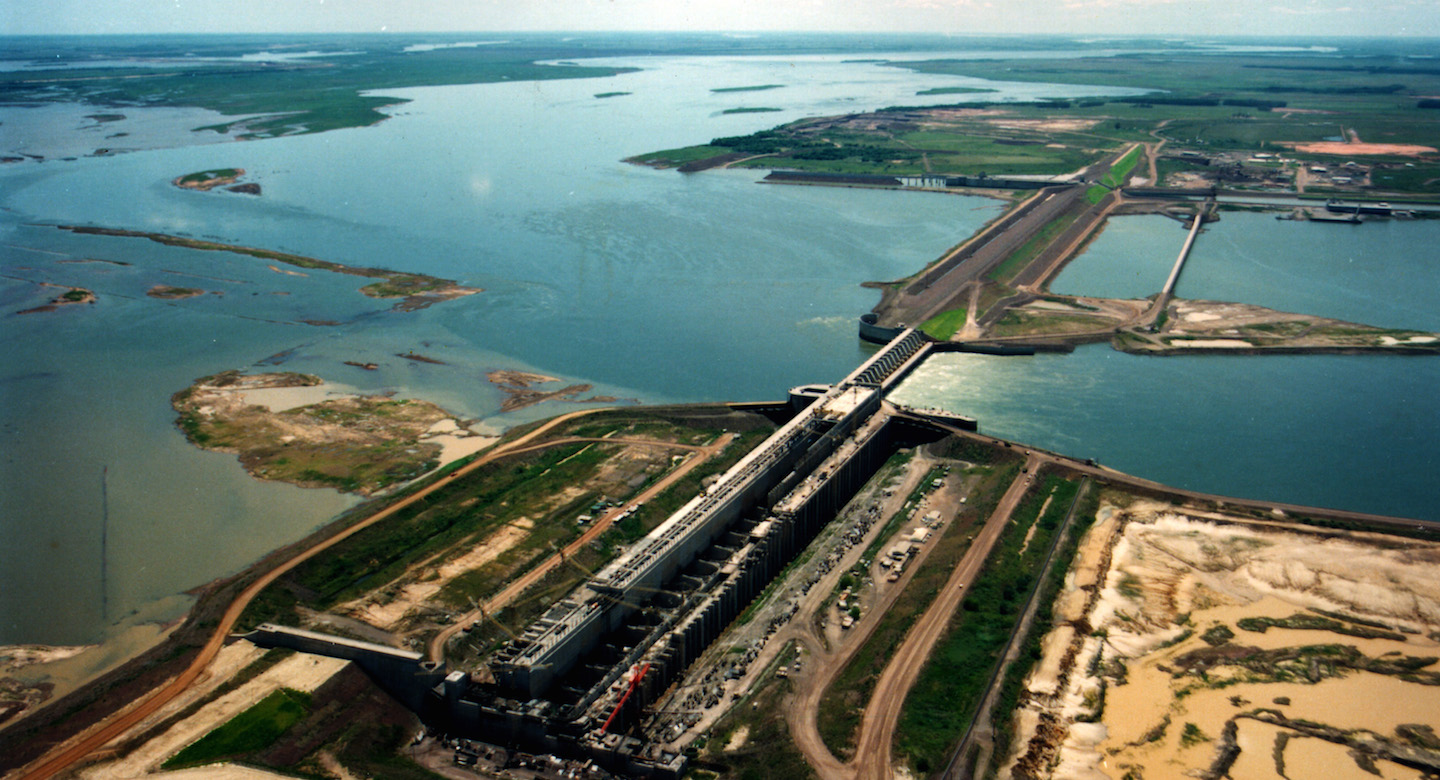
The Yaciretá/Yacyreta (the “cradle of the moon” in Guarani) Dam is located on the Paraná River in the northernmost part of Argentina near the border with Panama. It is a nearly 70 km long earth dam which includes four main concrete structures measuring almost 3.4 million cubic metres. This construction comprises a 236 m navigation lock, a main weir with 18 radial gates that are each 15 m wide and a discharge rate of 55,000 m3/s, a hydroelectric power plant with 20 Kaplan turbines with a diameter of 9 m (annual production of 17,000 GWh) and a secondary weir (on the second arm of the Paraná River) with radial gates and a discharge rate of 40 000 m3/s.
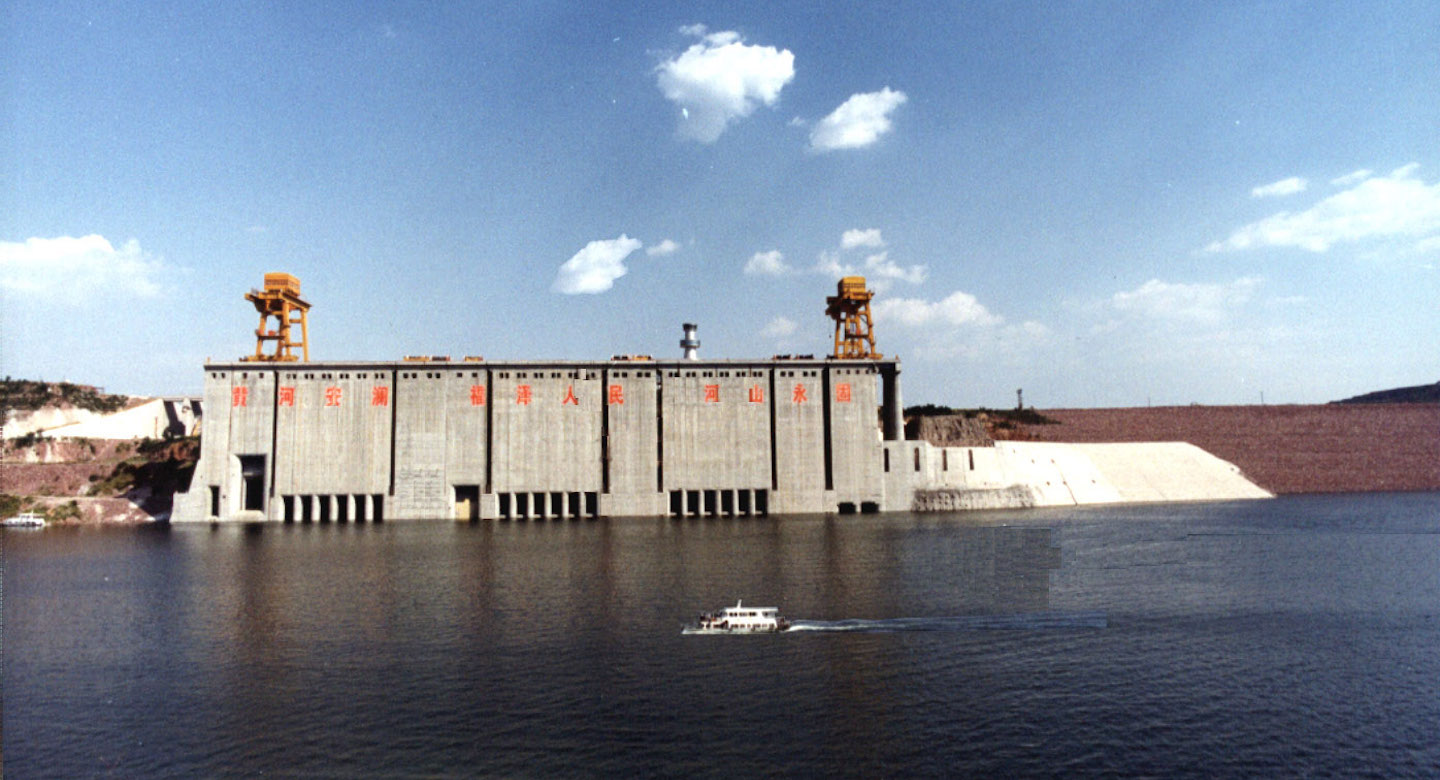
The Xiaolangdi hydroelectric power station on the Yellow River, located 180 kilometres from Zhengzhou, 40 kilometres from Luoyang, and 600 kilometres from Beijing, marks the achievement of a longstanding aspiration, namely, to “tame” the Yellow River, the cradle and scourge of Chinese civilisation.
The structure consists of a sloping earth-core rockfill dam 154 metres high and 1,317 metres long at the crest, a water intake 112 metres high and 278 metres wide, and an underground power plant 252 metres long, 26 metres wide, and 61 metres high. From 1994 to 1999, Dumez-GTM took part in building this power plant as the lead contractor in the joint venture in charge of the project. The primary objective was to control sedimentation in the Yellow River to mitigate its destructive flooding. One of the defining characteristics of this structure, however, is that it meets a multiplicity of objectives, including power-generation and improved use of water for agriculture in the region.
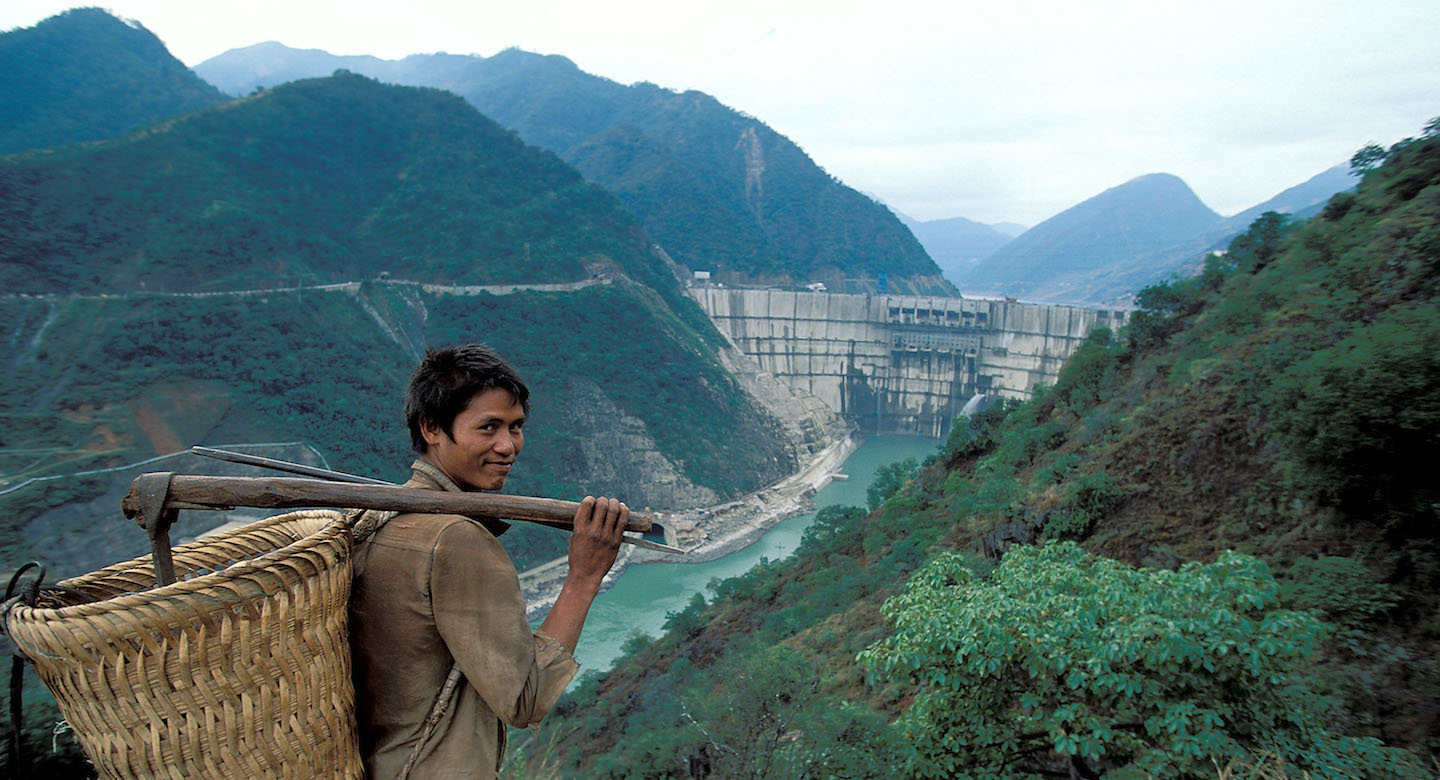
Ertan Dam, located at nearly 1,200 metres above sea level on the Yalong River, close to the city of Panzhihua, is the largest hydroelectric power-generation structure built in China after the Three Gorges Dam. Nearly 91 months were needed to complete it. This double-curvature concrete arch dam, 240 metres high and 775 metres long at the crest, is part of a much larger project consisting of 11 dams. The larger project is designed to put the region’s hydroelectric power-generating potential to use. Ertan Dam’s 17,000-gigawatt annual output capacity provides an alternative to coal, which is very polluting, and support economic development in the Sichuan region.
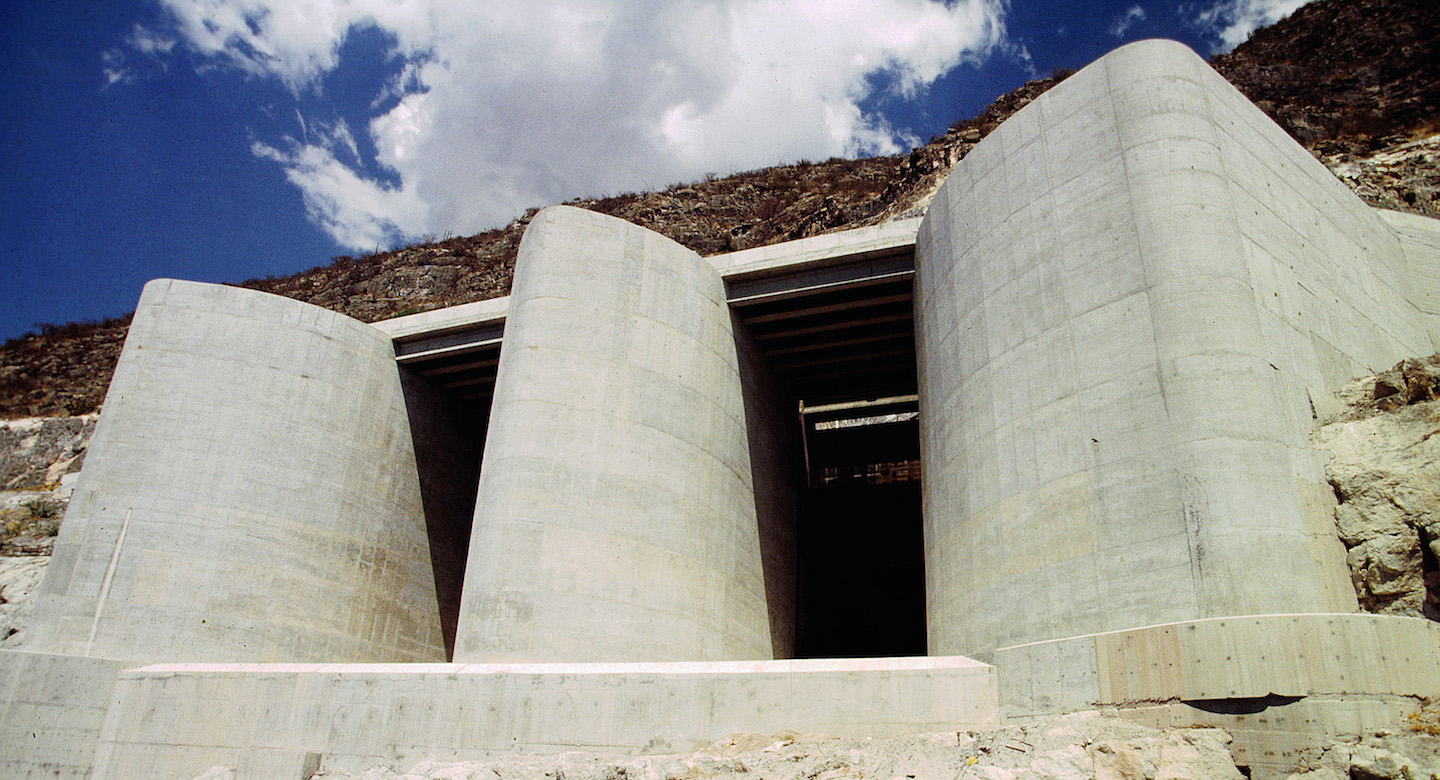
We were mandated by the Comisión Federal de Electricidad to construct a double-curvature arch dam measuring 207 metres high and 115 metres long at the ridge. This project included a diversion tunnel, a spillway tunnel capable of evacuating 3,000 m3/s, 2 tunnels (618 m long), a water intake, 21 kilometres of concrete-lined intake gallery, a surge chamber, a sloped penstock pipe and an underground plant equipped with two 146-megawatt turbines.